Home Environment & Natural Behavior
A Five-Part Home Check: Is Your Cat's Everyday Environment Meeting Their Needs?
A safe home is more than a hazard-free one. Cats also need places to hide, choices in their day, ways to play, and a familiar rhythm. Use these five areas to see what is worth adjusting first.
Setting Up a Litter Box: Location, Size, Cleaning, and Changing Preferences
A litter box is not solved simply by having one. Help your cat toilet quietly, easily, and with confidence by considering resource choice, placement, box design, and litter preference — and rule out health problems when habits change suddenly.
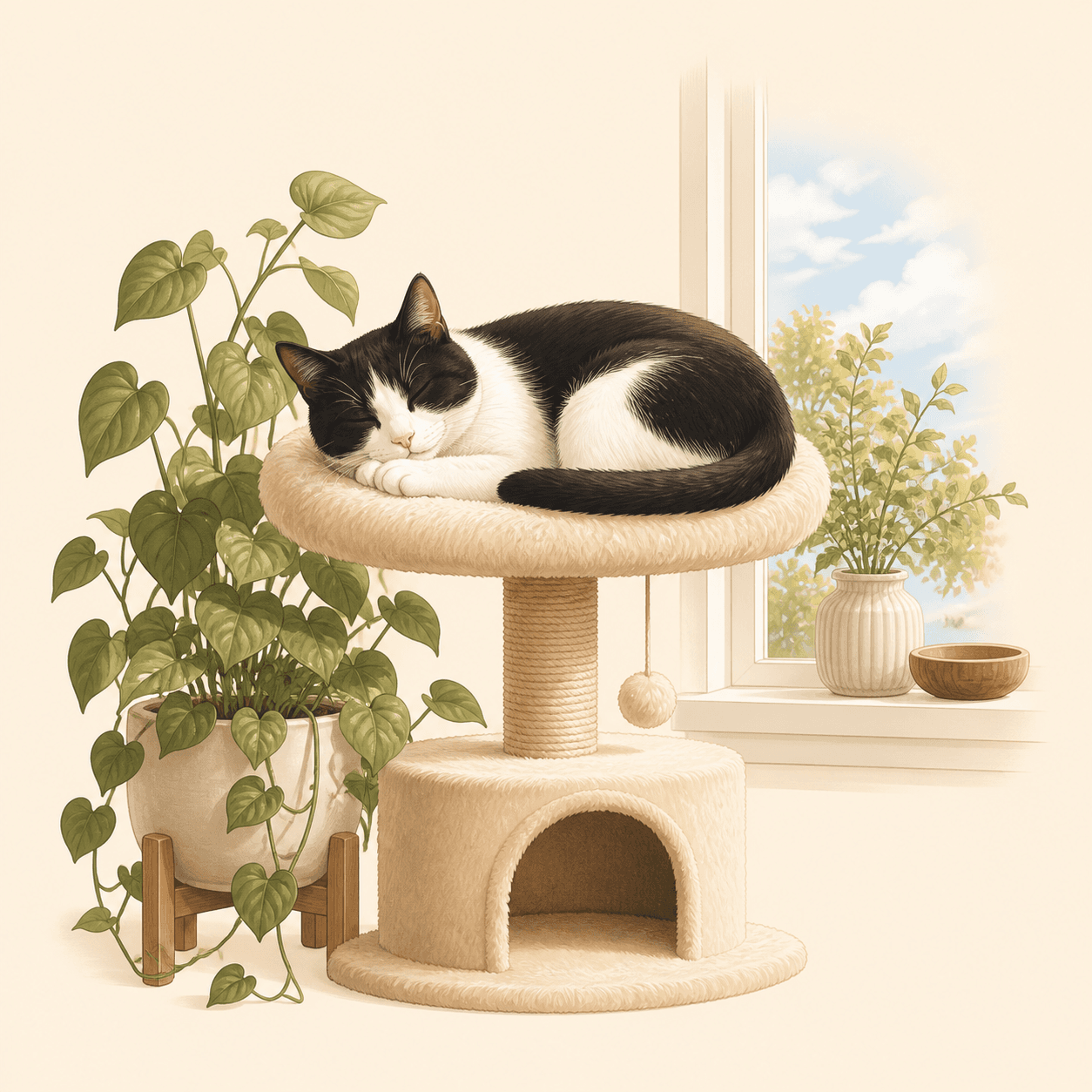
Arranging Hiding Places, Resting Areas, and Vertical Space
Being able to choose a place to hide, watch from above, or rest quietly gives a cat more control. The goal is not the tallest cat tree; it is safe options that fit your cat's age, body, and personality.
Making Play and Foraging Part of Everyday Life
Chasing, pouncing, grabbing, exploring, and searching for food are normal feline behaviors. Short, regular activities that fit an individual cat are usually easier to sustain than one very long play session now and then.
Scratching Is Normal: Choosing Material, Direction, and Location
Scratching helps cats maintain their claws, leave scent and visual marks, stretch, and carry out normal daily behavior. Rather than trying to stop it, offer scratching choices your cat will genuinely use.
Sensory Stimulation, Window Safety, and Environmental Rotation for Indoor Cats
Indoor living can reduce many outside dangers, but it does not automatically meet every need. Good enrichment gives a cat safe choices, a manageable amount of novelty, and a familiar place to return to — not constant stimulation.